



Type 2 Diabetes
The most common form of diabetes — often preventable and very manageable.
What is it
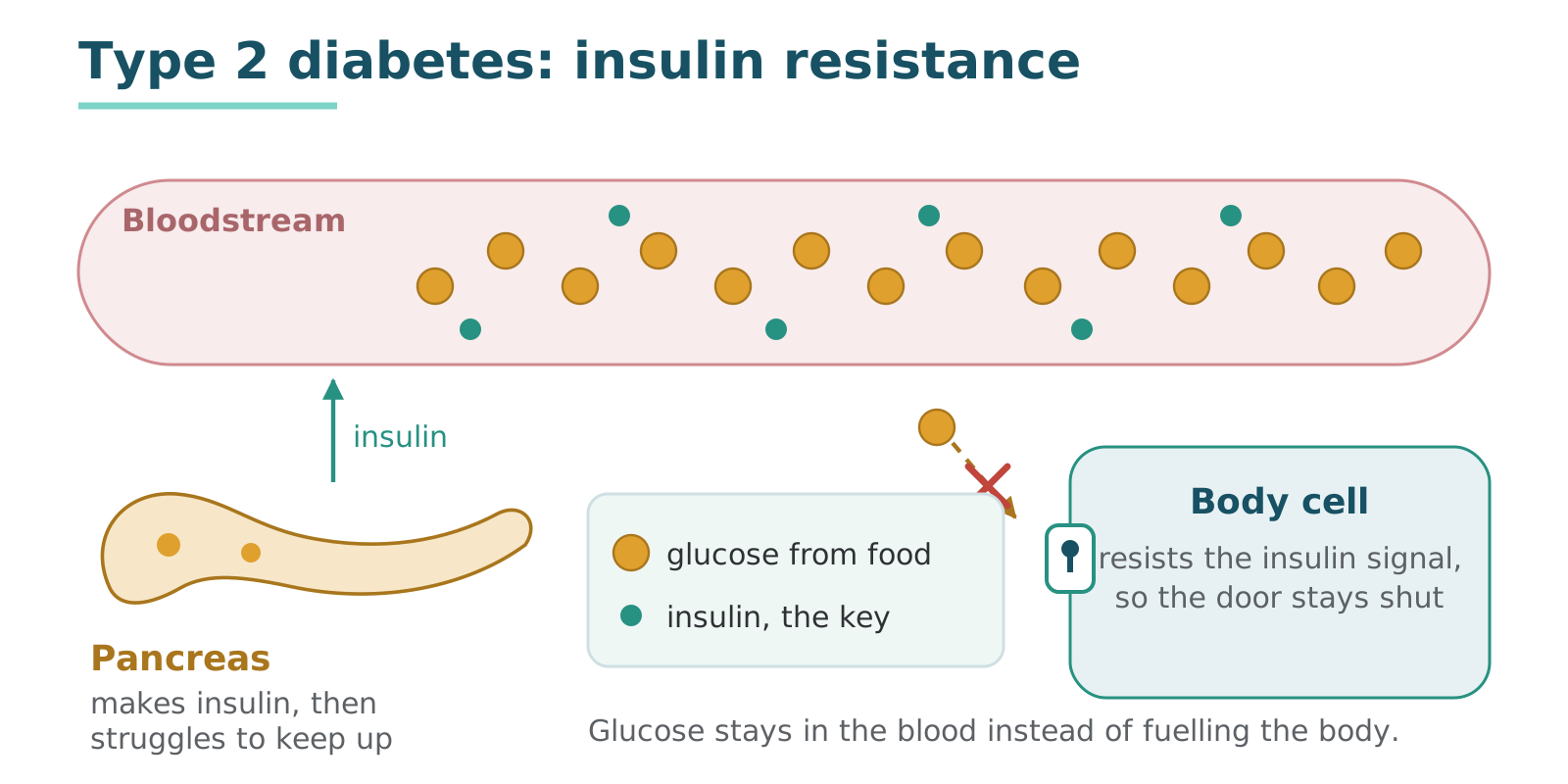
Your body turns food into a sugar called glucose, which travels in the blood and fuels every cell. Insulin, a hormone made by the pancreas, acts like a key that lets glucose move out of the blood and into the cells that need it.
In type 2 diabetes, the cells stop responding well to insulin — a state called insulin resistance. The pancreas works harder to keep up, and over time it can no longer make enough.
Glucose then builds up in the blood, and if it stays high for years it can quietly damage the eyes, kidneys, nerves, heart and blood vessels.
The encouraging part is that type 2 diabetes responds well to treatment, and the earlier it is found, the more of that damage can be prevented.
How it is diagnosed
Type 2 diabetes is diagnosed with simple blood tests. The most informative of these is the HbA1c, which reflects your average blood glucose over roughly the previous three months.
HbA1c
A result of 6.5 per cent or higher points to diabetes, while a result between 5.7 and 6.4 per cent sits in the prediabetes range.
Fasting Glucose
A fasting glucose test measures your blood sugar after an overnight fast.
Glucose Tolerance Test
An oral glucose tolerance test measures glucose before and again two hours after drinking a measured sugary drink.
Symptoms
Symptoms may include increased thirst, frequent urination, tiredness, blurred vision or cuts that are slow to heal.
Many people, however, feel entirely well in the early years, which is why testing rather than symptoms is what usually leads to the diagnosis.
How it is managed
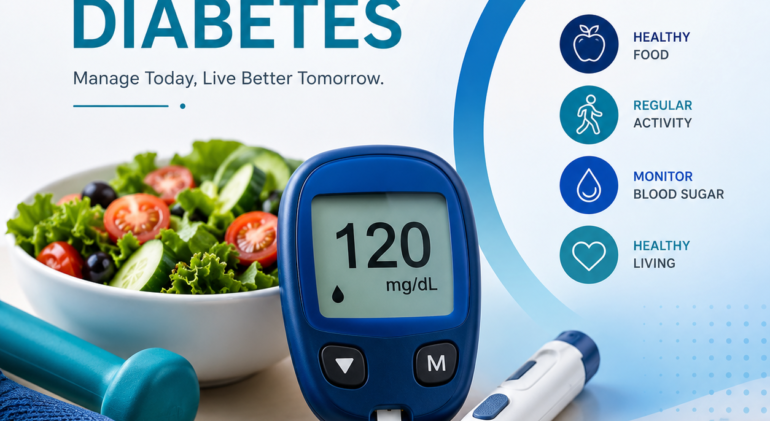
Treatment is built around how you eat, how you move and how much weight you carry, with medication added when it is needed.
Steady, regular meals that include plenty of vegetables, whole grains and lean protein — and fewer sugary drinks and refined carbohydrates — make a substantial difference.
Regular activity, even brisk walking, helps your body use its own insulin more effectively, and losing even five to ten per cent of your body weight can lower blood glucose meaningfully.
Medication is a normal part of care and not a sign of failure. Metformin remains the usual starting point, and newer medicines such as GLP-1 receptor agonists and SGLT2 inhibitors lower glucose while also protecting the heart and kidneys.
Some people eventually need insulin, and doing so simply reflects the natural course of the condition rather than anything you have done wrong.
Alongside glucose, we monitor your HbA1c, blood pressure, cholesterol, kidney function, eyes and feet at regular intervals. This surveillance is what prevents complications
When to seek care promptly
Seek care promptly if you have very high blood glucose together with nausea, vomiting, confusion or heavy breathing, or if signs of low blood glucose such as shakiness, sweating or confusion do not improve after taking sugar.
Further reading
For further reading, the American Diabetes Association and the US National Institute of Diabetes and Digestive and Kidney Diseases publish reliable patient material, as does the Endocrine Society’s patient hub.
Speak with our team
Our specialist endocrinologists diagnose and manage this condition every day. Request a consultation with our team today.