When the glands above your kidneys make too much or too little cortisol.
What is it
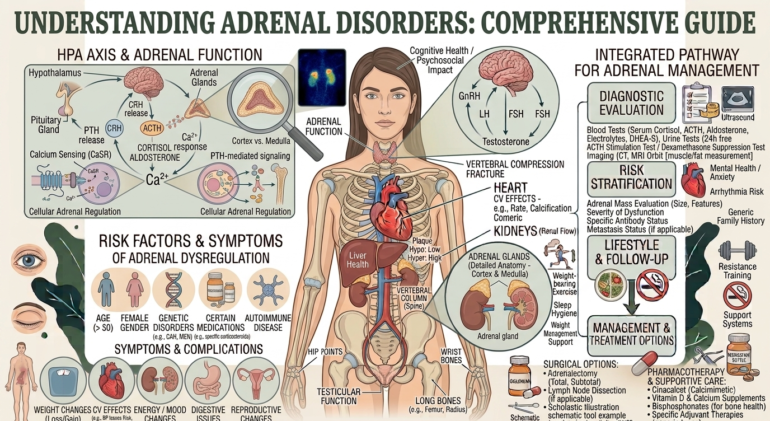
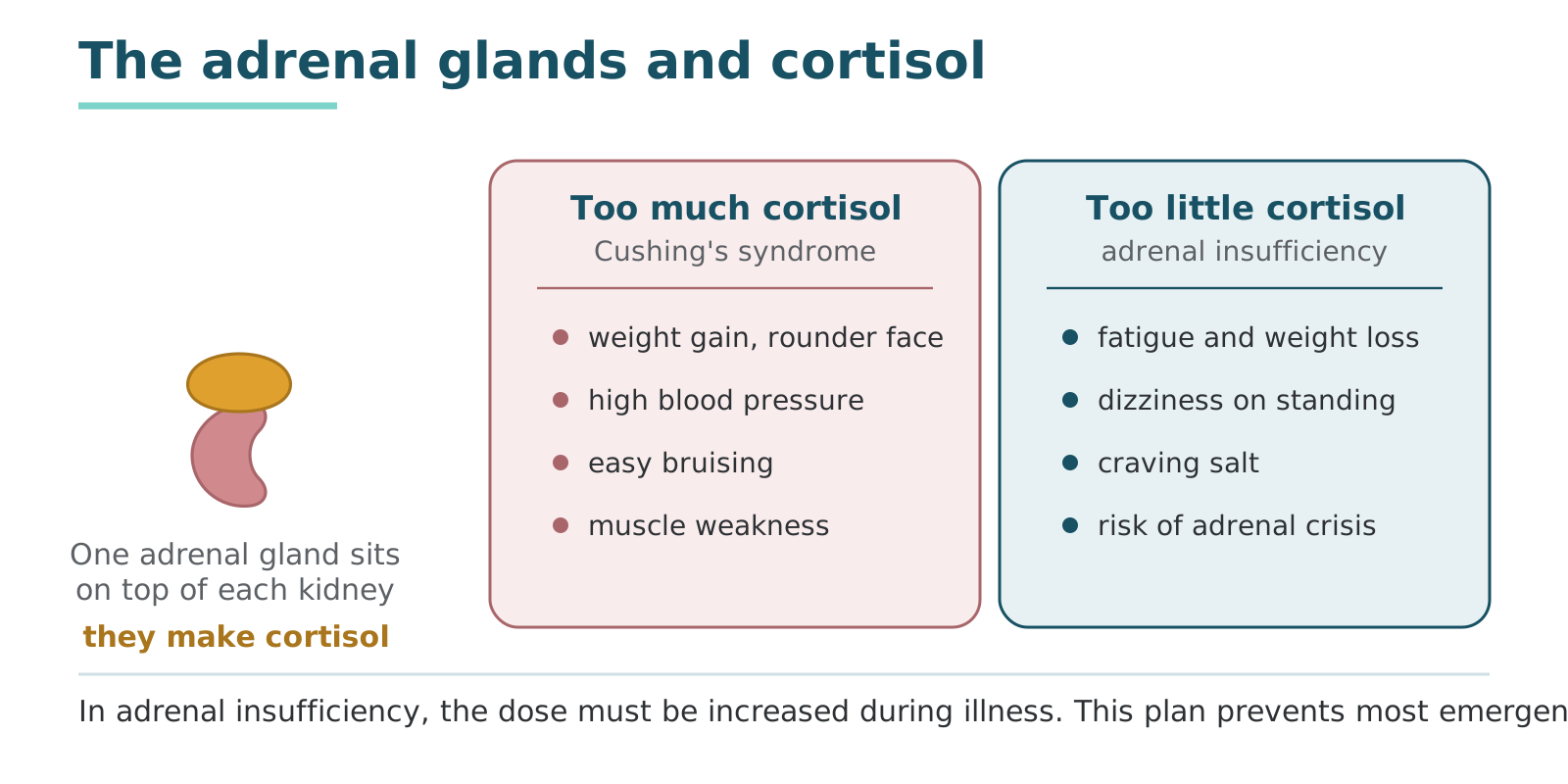
You have two adrenal glands, one sitting on top of each kidney. They produce cortisol, the body’s main stress hormone; aldosterone, which controls salt balance and blood pressure; and catecholamines such as adrenaline.
Too much cortisol, known as Cushing’s syndrome, can cause weight gain, a rounder face, high blood pressure, easy bruising and muscle weakness. Too little, called adrenal insufficiency and including Addison’s disease, causes fatigue, weight loss, dizziness and a craving for salt.
Adrenal nodules are also found commonly and incidentally on scans done for other reasons, and most of these need only assessment rather than treatment.
How it is diagnosed
Hormone testing is the starting point. Blood, urine or saliva tests measure cortisol and related hormones, sometimes at particular times of day, because cortisol follows a daily rhythm and a single random level tells us little.
Stimulation and suppression tests then confirm whether the glands are genuinely over- or under-working. These involve giving a medication and measuring the hormonal response, and they are what turn a suggestive result into a diagnosis. Imaging with CT or MRI examines the glands themselves and is particularly important where a nodule has been found.
How it is managed
Adrenal insufficiency is treated by replacing the hormones the glands are no longer making, using steroid replacement taken daily. Just as important is the plan for what to do when you are unwell: patients are taught to increase their steroid dose during illness, to use an emergency injection where needed, and to carry information identifying their condition. This planning prevents the great majority of serious episodes.
Cushing’s syndrome is treated by addressing its cause, which may mean medication, surgery, or the careful withdrawal of steroid medication where that is responsible.
Incidental nodules are usually managed with straightforward assessment to confirm they are not producing hormones and are benign in appearance, followed by a period of monitoring.
When to seek care promptly
In someone with adrenal insufficiency, severe weakness, vomiting, abdominal pain, confusion or low blood pressure may indicate an adrenal crisis. This is a medical emergency and needs immediate treatment.
Further reading
The Endocrine Society patient hub (hormone.org) and the NIDDK’s endocrine disease pages (niddk.nih.gov/health-information/endocrine-diseases) both cover adrenal conditions.
Speak with our team
Our specialist endocrinologists diagnose and manage this condition every day. Request a consultation with our team today.