Hypothyroidism and hyperthyroidism — two common, treatable imbalances.
What is it
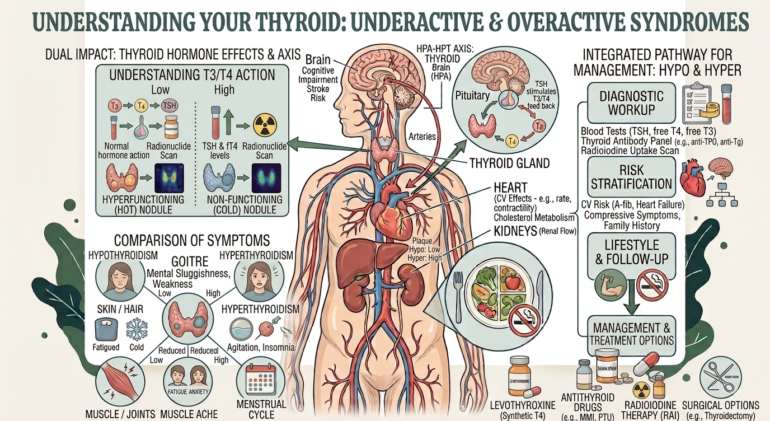
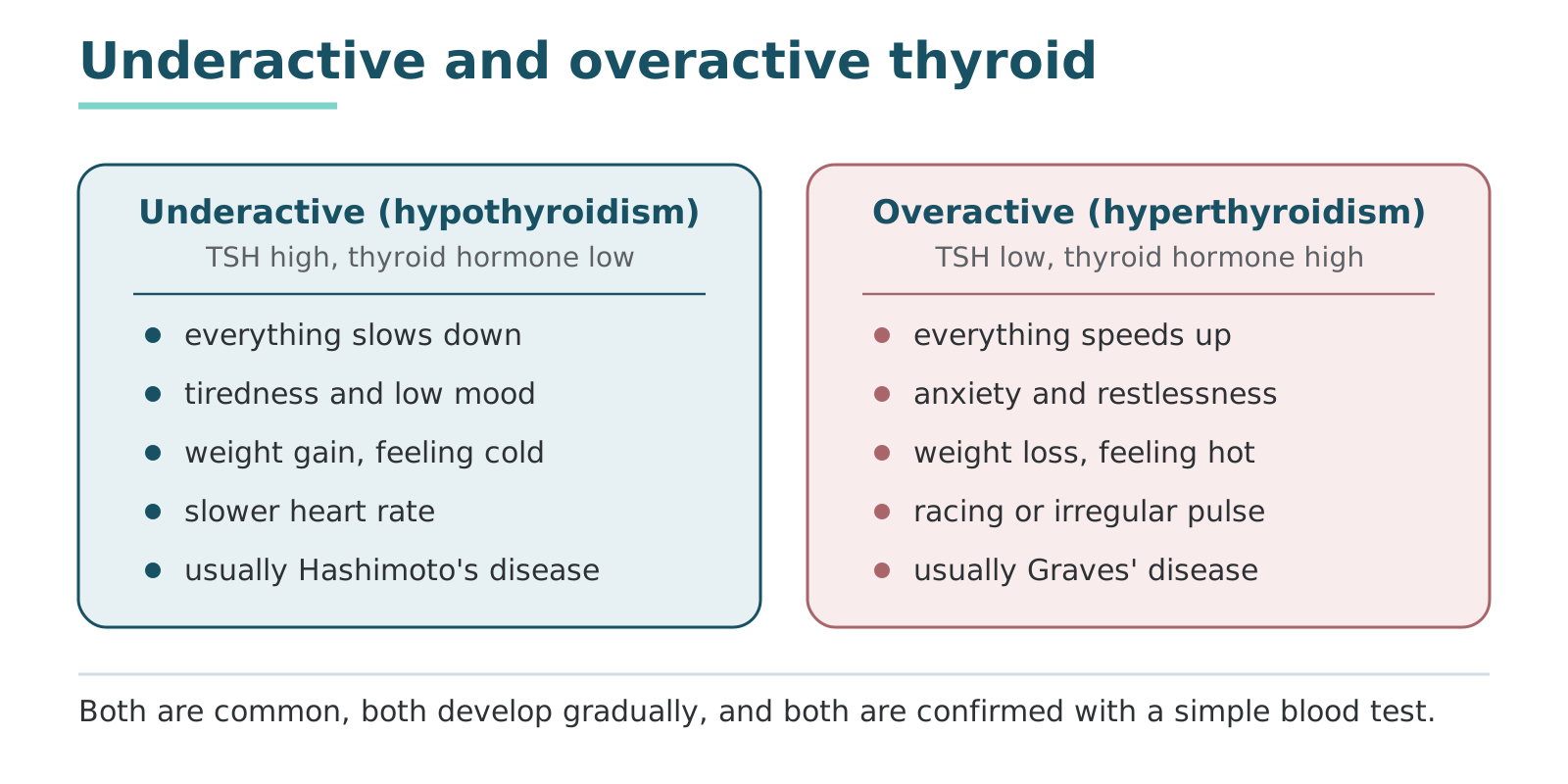
Hypothyroidism means the thyroid is producing too little hormone, and the body slows down as a result. The most common cause is an autoimmune condition called Hashimoto’s thyroiditis. Hyperthyroidism is the reverse: too much hormone, and everything speeds up. The usual cause in this case is Graves’s disease, also autoimmune.
Both develop gradually and both are easy to mistake for stress, low mood or simply getting older. Weight change, fatigue, palpitations, heat or cold intolerance and disturbed sleep are all non-specific on their own. This is exactly why a blood test is so useful — it settles the question in a way that symptoms alone cannot.
How it is diagnosed
A TSH together with free T4, and often T3, confirms whether the thyroid is under- or over-active andhow marked the imbalance is.
Antibody testing then helps pinpoint the cause, distinguishing Hashimoto’s thyroiditis from Graves’s disease and from the less common causes. Where the thyroid is overactive, a radioactive iodine uptake scan or an ultrasound can show why — for example whether the whole gland is overworking or a single nodule is responsible. The distinction matters, because it changes the treatment.
Many people, however, feel entirely well in the early years, which is why testing rather than symptoms is what usually leads to the diagnosis.
How it is managed
Hypothyroidism is treated with a daily thyroid hormone tablet, levothyroxine, which simply replaces what the gland is no longer making. The dose is fine-tuned using blood tests until your levels are stable, and most people then remain on the same dose for years.
Hyperthyroidism has three main treatment routes: anti-thyroid medicines, radioactive iodine, or occasionally surgery. The right choice depends on the underlying cause, your age and circumstances, and your own preferences, and we will talk through the trade-offs of each with you rather than simply assigning one. While treatment takes effect, a beta-blocker can quickly ease a racing heart, tremor or anxiety.
In both conditions, periodic blood tests keep hormone levels steady over time. Once you are settled, monitoring usually becomes an annual routine rather than an ongoing preoccupation.
When to seek care promptly
An overactive thyroid accompanied by high fever, severe agitation or a very rapid, irregular heartbeat may indicate thyroid storm, a rare emergency. In known hypothyroidism, severe fatigue, confusion or feeling profoundly cold also warrants prompt assessment.
Further reading
The American Thyroid Association (thyroid.org) and the Endocrine Society patient hub (hormone.org) are both good sources of further information.
Speak with our team
Our specialist endocrinologists diagnose and manage this condition every day. Request a consultation with our team today.