Managing blood fats to protect your heart and blood vessels.
What is it
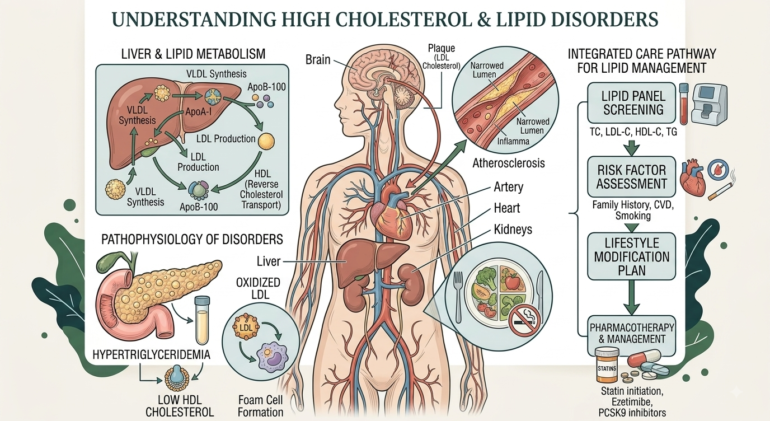
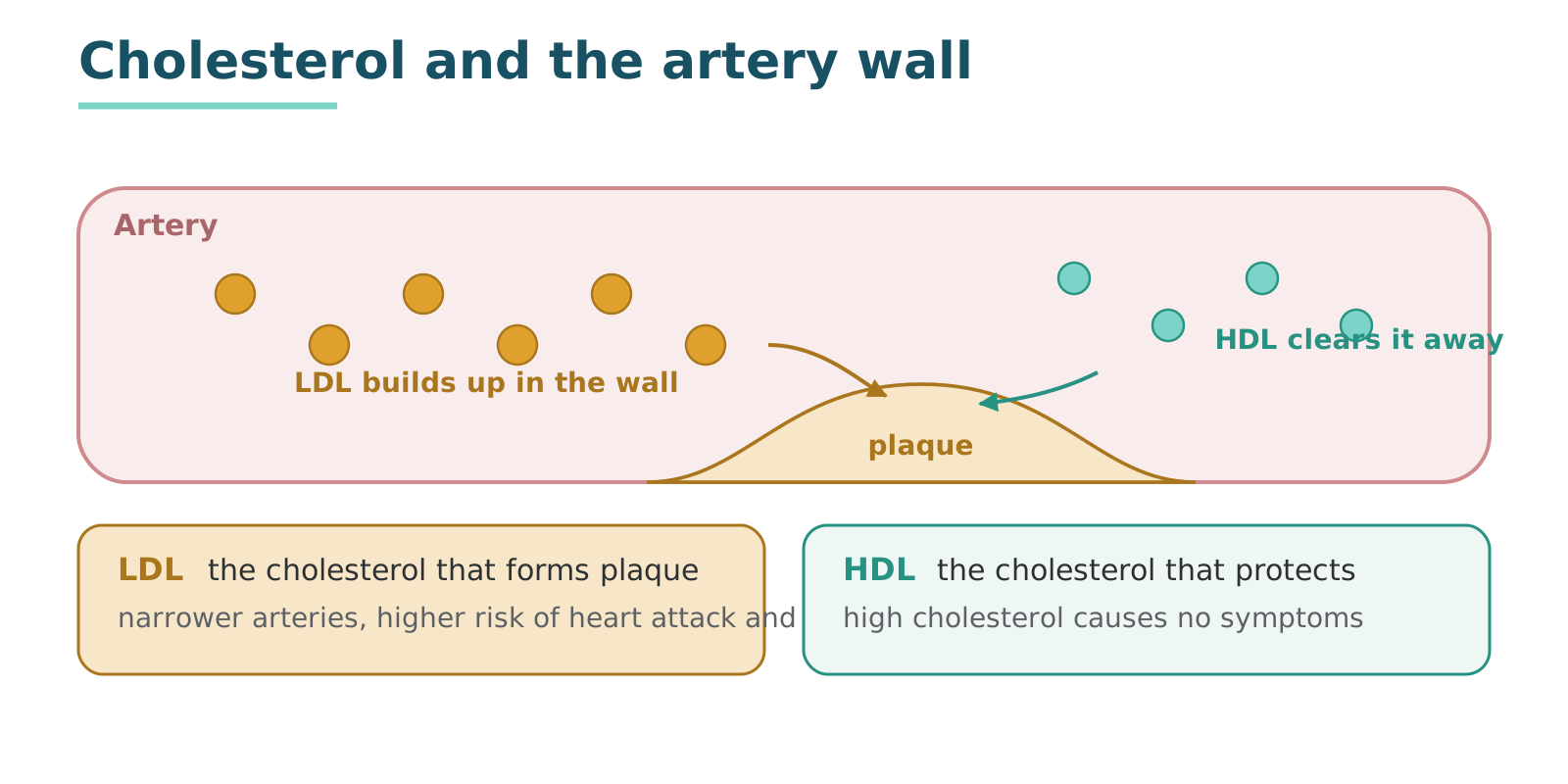
Cholesterol and triglycerides are fats carried in the blood. LDL, the so-called bad cholesterol, can build up in the artery walls to form plaque that narrows the arteries and raises the risk of heart attack and stroke. HDL, the good cholesterol, helps clear it away.
High cholesterol causes no symptoms at all, so it is found on a blood test rather than through how you feel. The causes include genetics, diet, and conditions such as diabetes and thyroid disease.
Some families carry an inherited form called familial hypercholesterolaemia, in which levels are very high from a young age and the risk to the heart begins decades earlier than usual; our lipid specialists manage these families, including screening relatives who may be affected without knowing it.
How it is diagnosed
A lipid panel measures total cholesterol, LDL, HDL and triglycerides from a single blood sample.
Those numbers are then interpreted in context. We combine them with your blood pressure, smoking history, diabetes status and family history to estimate your overall risk of heart disease, since the same cholesterol level carries very different implications in different people. Additional tests are used selectively — a coronary calcium score to clarify risk where it is borderline, or genetic testing where an inherited form is suspected.
How it is managed
Heart-healthy eating means more fibre, vegetables and healthy fats, and less saturated fat and refined sugar. Regular exercise and weight reduction improve both cholesterol and triglycerides, and triglycerides in particular respond quickly to changes in alcohol and refined carbohydrate intake.
Statins are the mainstay of drug treatment. They are among the best-studied medicines in use, they lower LDL substantially, and they reduce heart attacks and strokes across a wide range of patients.
Where more is needed, or where statins are not tolerated, additional options such as ezetimibe or the newer injectable therapies are available, and these are particularly valuable in inherited forms.
Finally, treating the underlying contributors matters. Bringing diabetes under control and correcting thyroid dysfunction both improve lipid levels in their own right.
Further reading
The American Heart Association (heart.org/cholesterol) and the National Lipid Association’s patient site (learnyourlipids.com) explain lipid disorders clearly.
Speak with our team
Our specialist endocrinologists diagnose and manage this condition every day. Request a consultation with our team today.