The ‘master gland’ at the base of the brain that directs the others.
What is it
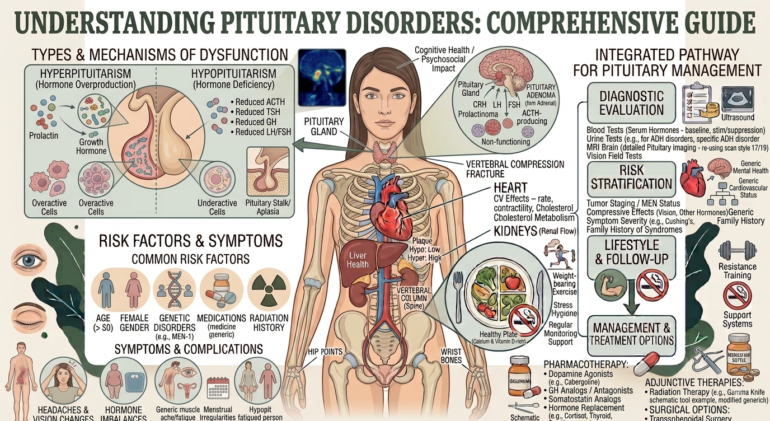
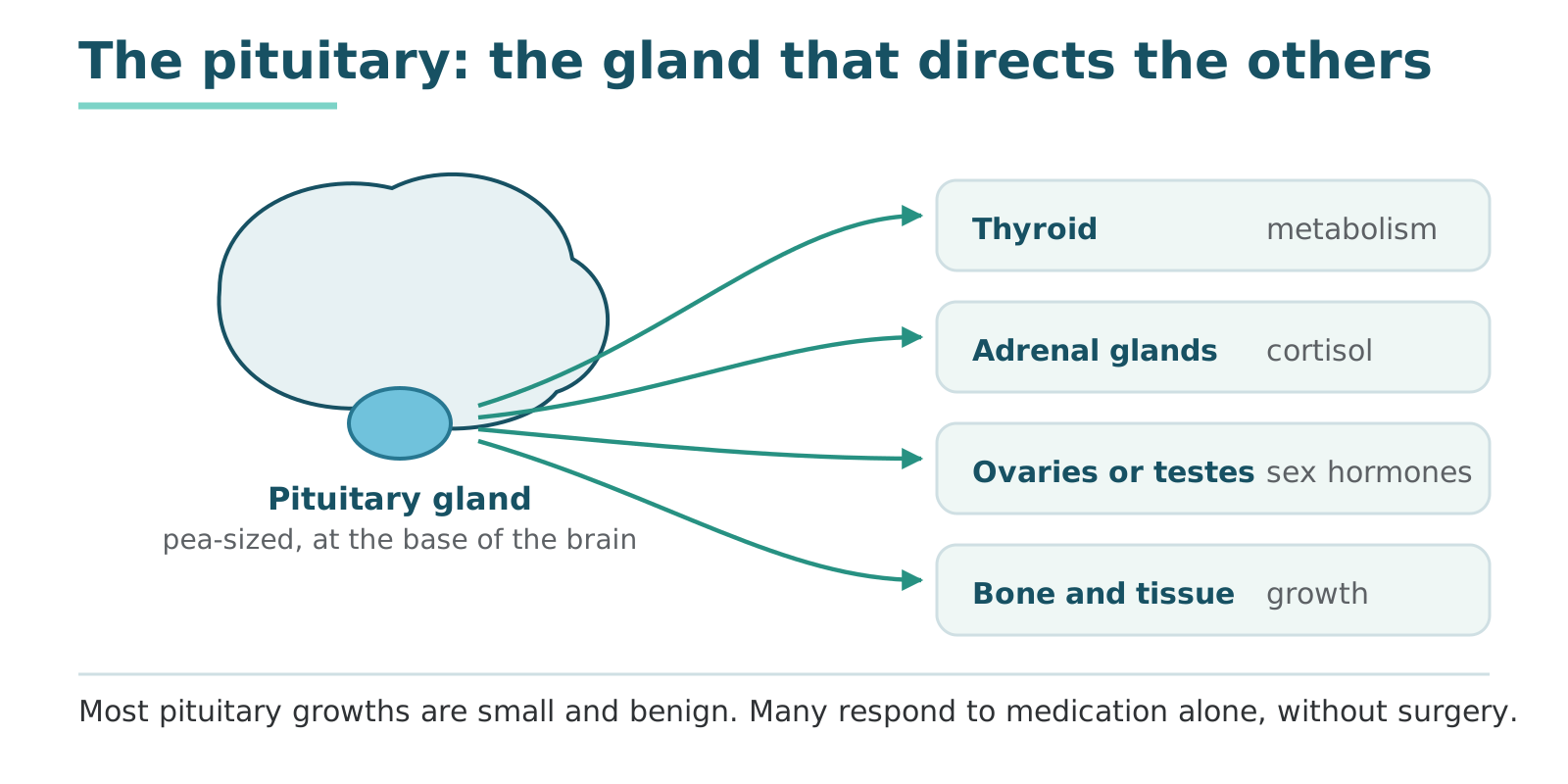
The pituitary is a pea-sized gland at the base of the brain that sends signals telling the thyroid, the adrenal glands, the ovaries or testes and others what to do. It also controls growth and, in new mothers, milk production. For its size, it has a remarkable amount of influence.
Most pituitary problems arise from small, benign growths called adenomas.
Some of these produce too much of a particular hormone — prolactinomas, for instance, cause milky discharge and irregular periods, while growth hormone excess causes acromegaly, a gradual enlargement of the hands, feet and facial features. Others produce no hormone at all but press on nearby structures, most importantly the nerves carrying vision.
How it is diagnosed
Blood tests measure both the pituitary hormones and the hormones of the glands they control, since comparing the two shows where the problem lies.
An MRI provides a detailed picture of the pituitary and shows the size and position of any growth. Where a growth is larger, formal vision testing checks whether it is pressing on the nearby optic nerves, and this is repeated over time to make sure the situation remains stable.
How it is managed
Many pituitary tumours, and prolactinomas in particular, respond very well to medication alone — often shrinking substantially without any need for surgery. This is one of the areas of endocrinology where medical treatment has largely replaced an operation.
Where surgery is needed, most growths can be removed through a minimally invasive route via the nose, and we coordinate this with neurosurgery. If the gland is underactive, whether from the growth itself or from its treatment, the missing hormones are replaced.
Follow-up involves periodic scans and blood tests to track the response and confirm that things remain stable. Most people settle into a routine of annual review.
When to seek care promptly
A sudden severe headache with vision loss or double vision may signal a rare pituitary emergency and requires immediate assessment.
Further reading
The Pituitary Society (pituitarysociety.org) and the Endocrine Society patient hub (hormone.org) offer detailed information for patients.
Speak with our team
Our specialist endocrinologists diagnose and manage this condition every day. Request a consultation with our team today.