The ‘silent’ bone-thinning disease — preventable and treatable.
What is it
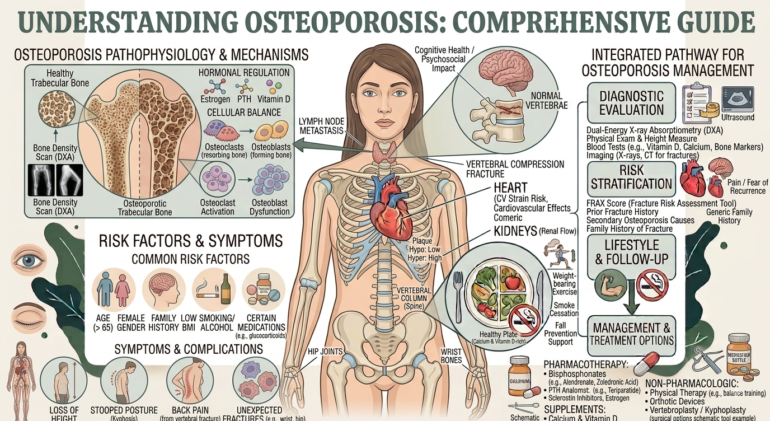
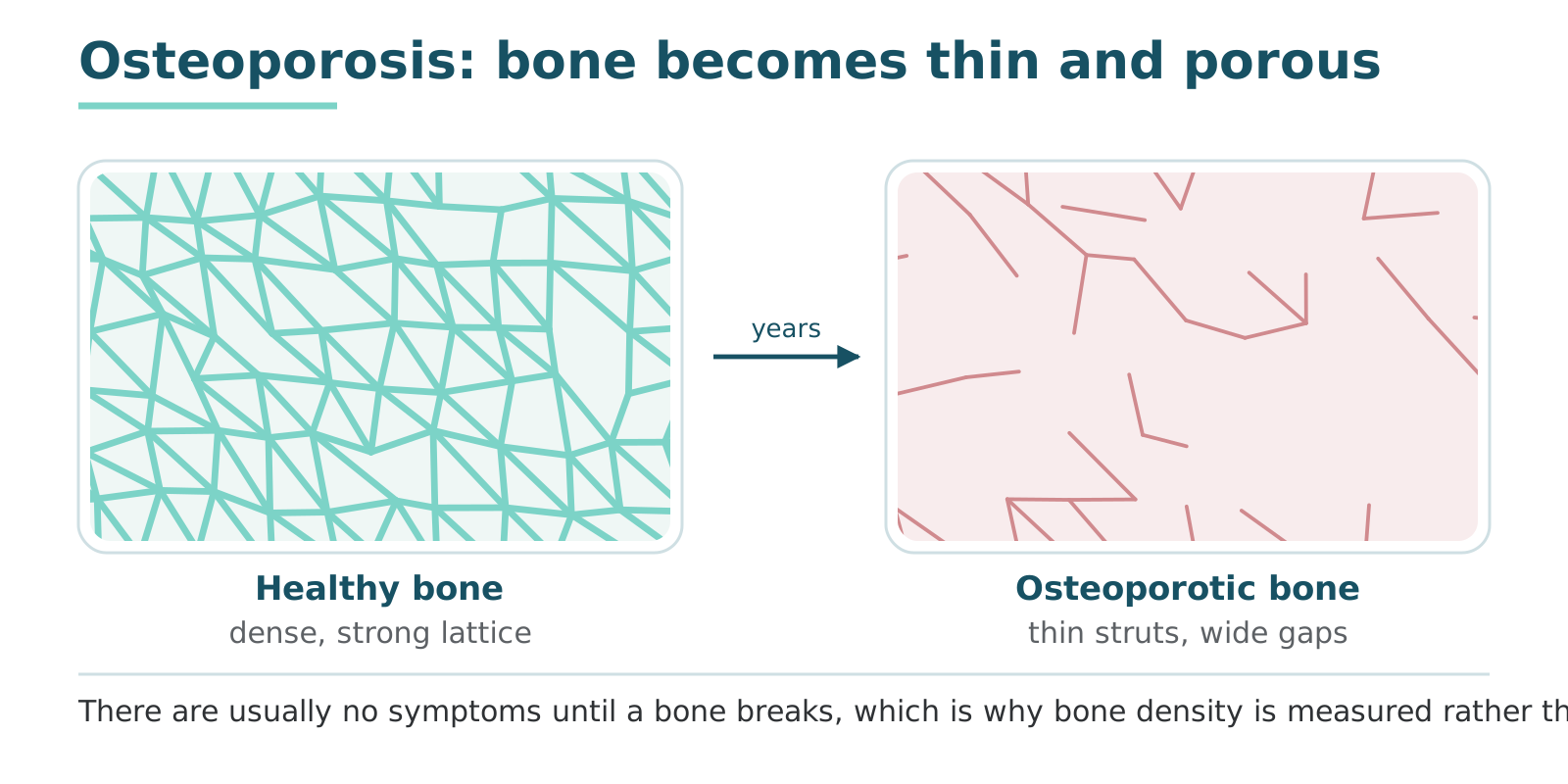
Bone is living tissue that constantly renews itself, breaking down and rebuilding throughout life. In osteoporosis, the breakdown outpaces the rebuilding, so bones become thin, porous and fragile. The consequence is fracture, most commonly of the hip, spine and wrist. It is described as silent because there are usually no symptoms at all until a bone breaks. Risk rises with age, after menopause as oestrogen falls, with certain medications such as long-term steroids, and with several of the hormone conditions our clinic treats. A fracture is not an inevitable part of ageing, and the point of assessment is to intervene before one occurs.
How it is diagnosed
A DXA bone density scan is the central test. It is quick, painless and involves a very low dose of radiation, and it grades bone strength as a T-score that can be tracked over time. The FRAX tool then combines your bone density with personal factors such as age, previous fractures and medication use to estimate your ten-year fracture risk, which is often more useful than the density alone. Blood tests complete the assessment by checking calcium and vitamin D and by looking for hormonal causes of bone loss that may be treatable in their own right.
How it is managed
Adequate calcium and vitamin D underpin everything else, taken from diet where possible and fromsupplements where diet falls short. Weight-bearing exercise, including walking and strength training, helps maintain both bone density and the balance that prevents falls in the first place. Stopping smoking and limiting alcohol protect bone independently of anything else you do. Where medication is indicated, there are several effective options: bisphosphonates such as risedronate (Actonel®), alendronate (Fosamax®) and zoledronic acid (Aclasta®); raloxifene (Evista®); denosumab (Prolia®); teriparatide (Forteo®); and romosozumab (Evenity®). These differ in how they are given, how often, and how strongly they build or preserve bone, and we match the choice to your fracture risk, your other conditions and your preferences. Practical fall prevention at home — lighting, rugs, footwear, bathroom rails and a review of medications that cause dizziness — reduces fracture risk substantially and is too often overlooked.
Further reading
The Bone Health & Osteoporosis Foundation (bonehealthandosteoporosis.org) and the Endocrine Society patient hub (hormone.org) both offer detailed patient information.
Speak with our team
Our specialist endocrinologists diagnose and manage this condition every day. Request a consultation with our team today.