A common hormone imbalance affecting cycles, skin, weight and fertility
What is it
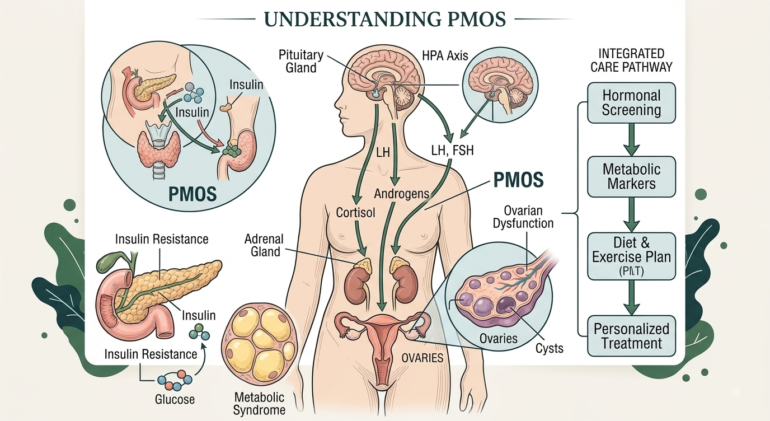
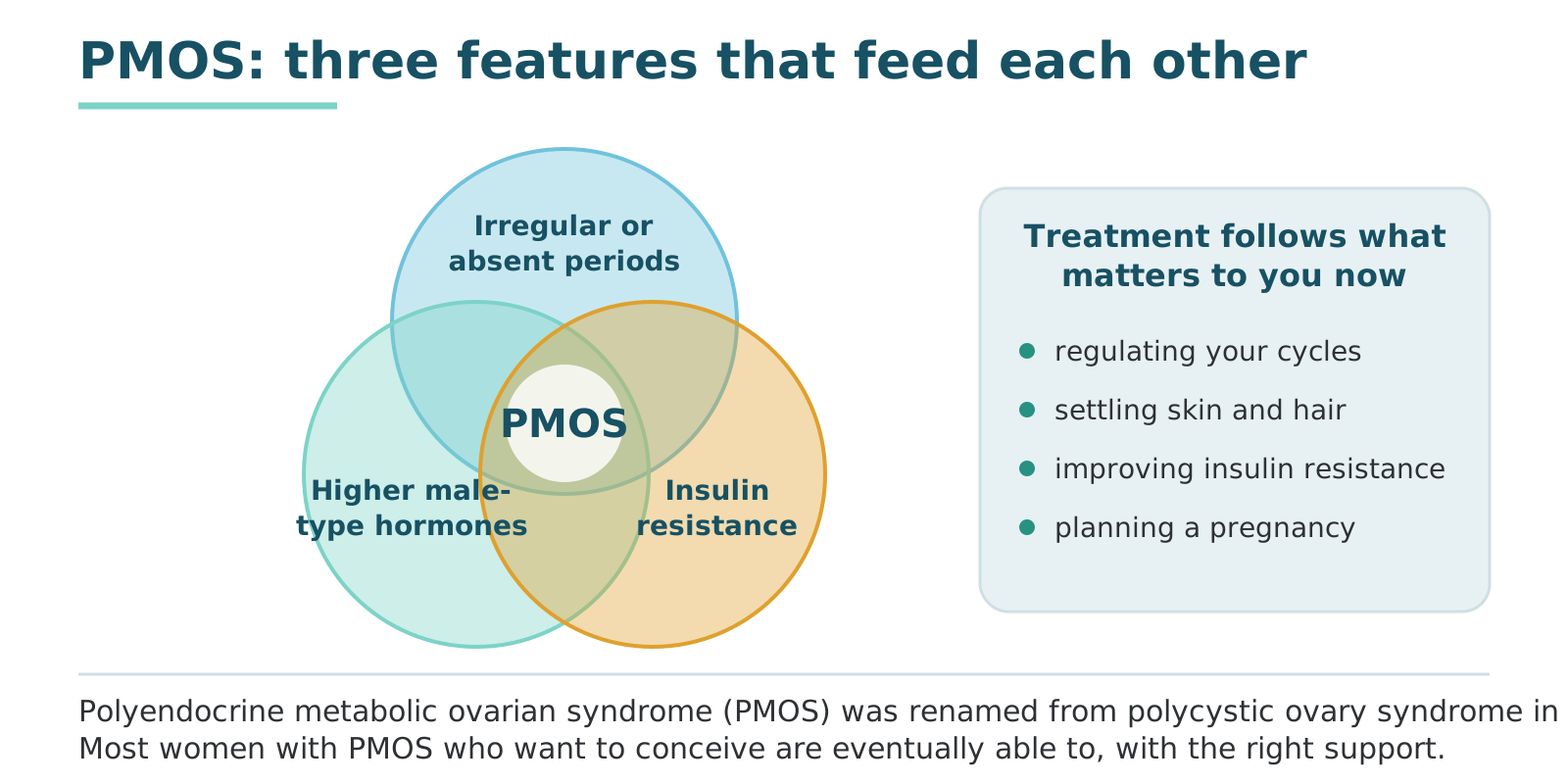
Polyendocrine metabolic ovarian syndrome, formerly known as polycystic ovary syndrome or PCOS, is one of the most common hormone conditions in women of reproductive age. The name was changed by international consensus in 2026, because the old one drew attention to ovarian cysts that are neither always present nor the substance of the problem, and obscured how many other body systems the condition touches. Three features tend to feed one another: irregular or absent periods, higher levels of male-type hormones which can cause acne and unwanted hair growth, and insulin resistance which affects weight and blood glucose.
It can also make conception more difficult, though most women with PMOS who want to conceive eventually do so with the right support.
The condition is very manageable, and treatment is tailored to what matters most to you at this point in your life — whether that is regulating your cycles, controlling the skin and hair changes, or planning a pregnancy.
How it is diagnosed
The assessment starts with your history: the pattern of your cycles, and whether you have noticed acne or excess hair growth. Blood tests then measure hormone levels and screen for the metabolic changes that accompany the condition, including blood glucose and cholesterol.
An ultrasound of the ovaries is sometimes used, though it is not always necessary to make the diagnosis. Just as important is ruling out the conditions that can look similar, particularly thyroid disease and other hormonal causes of irregular cycles, and we test for these as a matter of course.
How it is managed
Nutrition and activity improve insulin resistance and, with it, most of the symptoms. Even a modest weight loss can be enough to restore regular cycles. Where additional help is needed, GLP-1 and combined GLP-1/GIP weight-loss therapies are highly effective in this condition, and insulin sensitisers such as metformin and myo-inositol help some patients.
For cycle regulation, hormonal options work well and also improve acne and hair growth. Depending on your circumstances this may mean cyclical progesterone or the combined oral contraceptive pill. For persistent skin and hair symptoms, androgen blockers such as spironolactone are effective, and minoxidil or finasteride may be used for scalp hair loss.
When you are trying to conceive, we offer or coordinate treatments that support ovulation, and we work alongside your GP or fertility specialist as needed. Over the longer term we monitor for diabetes and for heart-health risks, since PMOS carries a r
Further reading
The Endocrine Society patient hub (hormone.org) and the US Office on Women’s Health (womenshealth.gov) both publish reliable information on the condition, and you may still find it listed there under its former name.
Speak with our team
Our specialist endocrinologists diagnose and manage this condition every day. Request a consultation with our team today.