An early warning stage — and the best time to change the course.
What is it
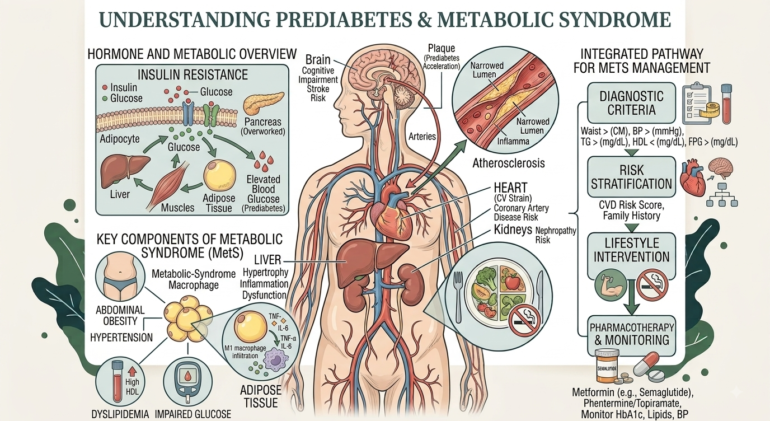
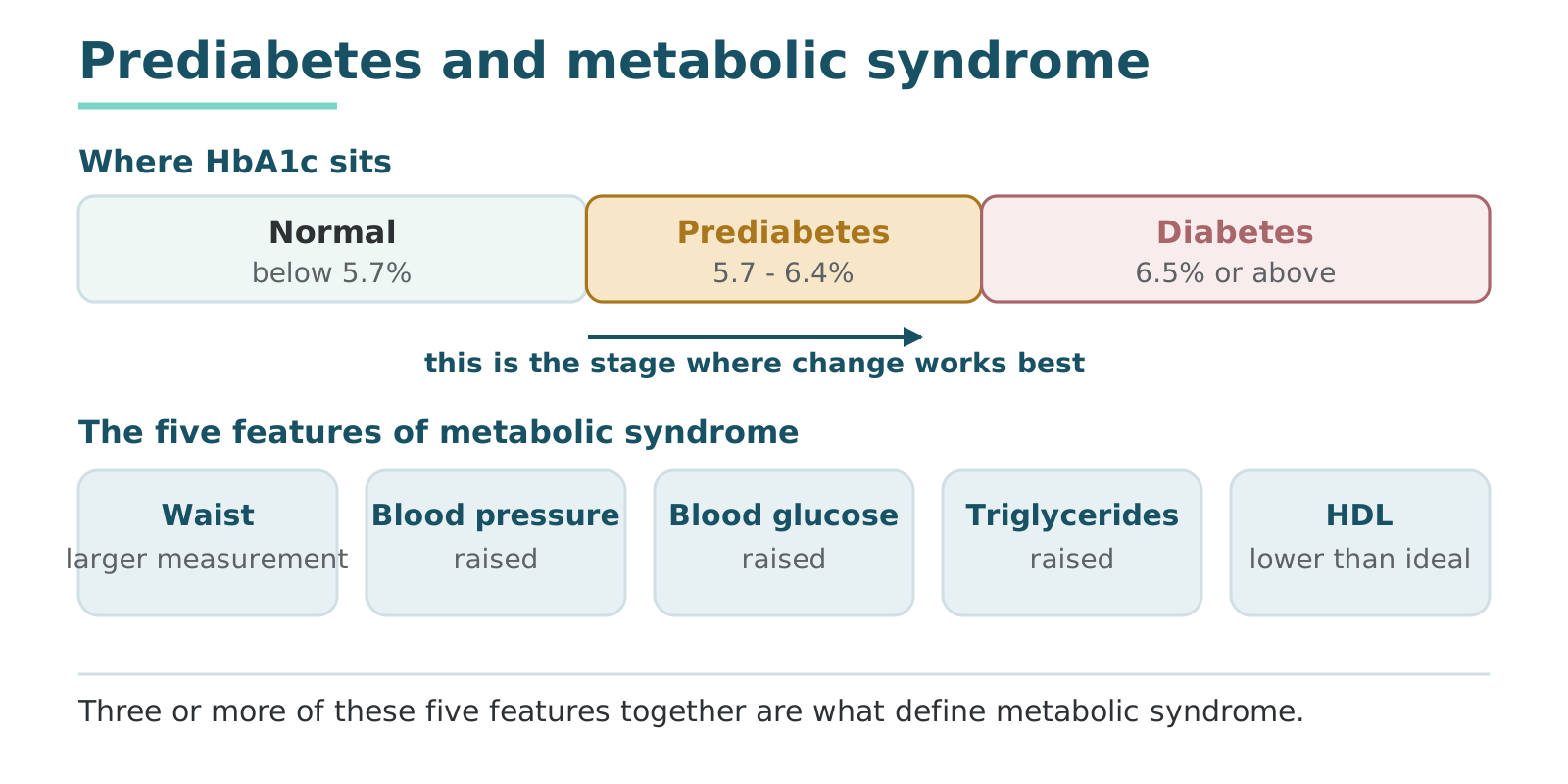
Prediabetes means your blood glucose is higher than normal but not yet in the diabetes range. Metabolic syndrome is a related cluster of findings: a larger waist, higher blood pressure, higher blood glucose, higher triglycerides and a lower level of the protective HDL cholesterol. Both are driven largely by insulin resistance, and they tend to travel together. Having three or more features of metabolic syndrome sharply raises the risk of developing diabetes, heart disease and stroke. The important point is that these changes are frequently reversible — this is the stage at which intervention gives the greatest return.
How it is diagnosed
Weight is the most powerful lever available. Losing five to seven per cent of your body weight roughly halves the risk of progressing to type 2 diabetes, and that target is deliberately modest because it is achievable and sustainable. Around 150 minutes of moderate activity each week supports both the weight change and insulin sensitivity independently of it. On the nutrition side, the priority is reducing sugary drinks and refined carbohydrates while increasing vegetables, fibre and healthy fats. Medication may be considered for higher-risk patients, with metformin the usual option, and blood pressure and cholesterol are treated on their own merits where they are raised.
Patient Education Library | 10
Periodic blood tests then track your direction of travel. Seeing the numbers move back towards normal is, for most people, the most motivating part of the process.
Many people, however, feel entirely well in the early years, which is why testing rather than symptoms is what usually leads to the diagnosis.
How it is managed
Treatment is built around how you eat, how you move and how much weight you carry, with medication added when it is needed.
Steady, regular meals that include plenty of vegetables, whole grains and lean protein — and fewer sugary drinks and refined carbohydrates — make a substantial difference.
Regular activity, even brisk walking, helps your body use its own insulin more effectively, and losing even five to ten per cent of your body weight can lower blood glucose meaningfully.
Medication is a normal part of care and not a sign of failure. Metformin remains the usual starting point, and newer medicines such as GLP-1 receptor agonists and SGLT2 inhibitors lower glucose while also protecting the heart and kidneys.
Some people eventually need insulin, and doing so simply reflects the natural course of the condition rather than anything you have done wrong.
Further reading
The CDC’s National Diabetes Prevention Program (cdc.gov/diabetes/prevention), the NIDDK’s prevention pages (niddk.nih.gov/health-information/diabetes/overview/preventing-type-2-diabetes) and the American Heart Association (heart.org) offer practical, evidence-based guidance.
When to seek care promptly
Our specialist endocrinologists diagnose and manage this condition every day. Request a consultation with our team today.
Speak with our team
Our specialist endocrinologists diagnose and manage this condition every day. Request a consultation with our team today.