A medical condition — treated with the same care and evidence as any other.
What is it
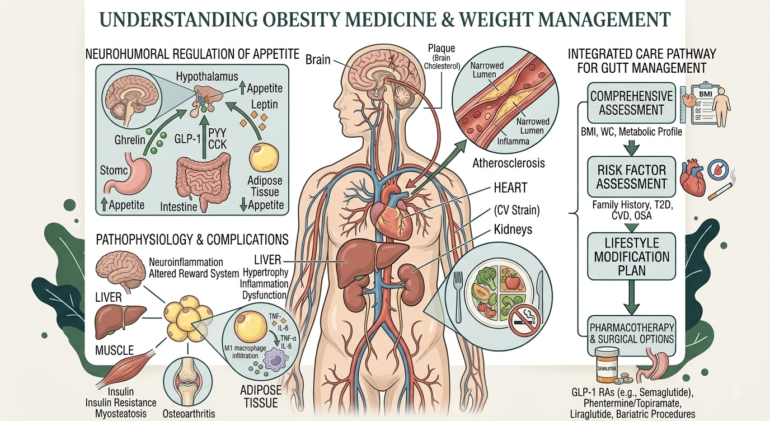
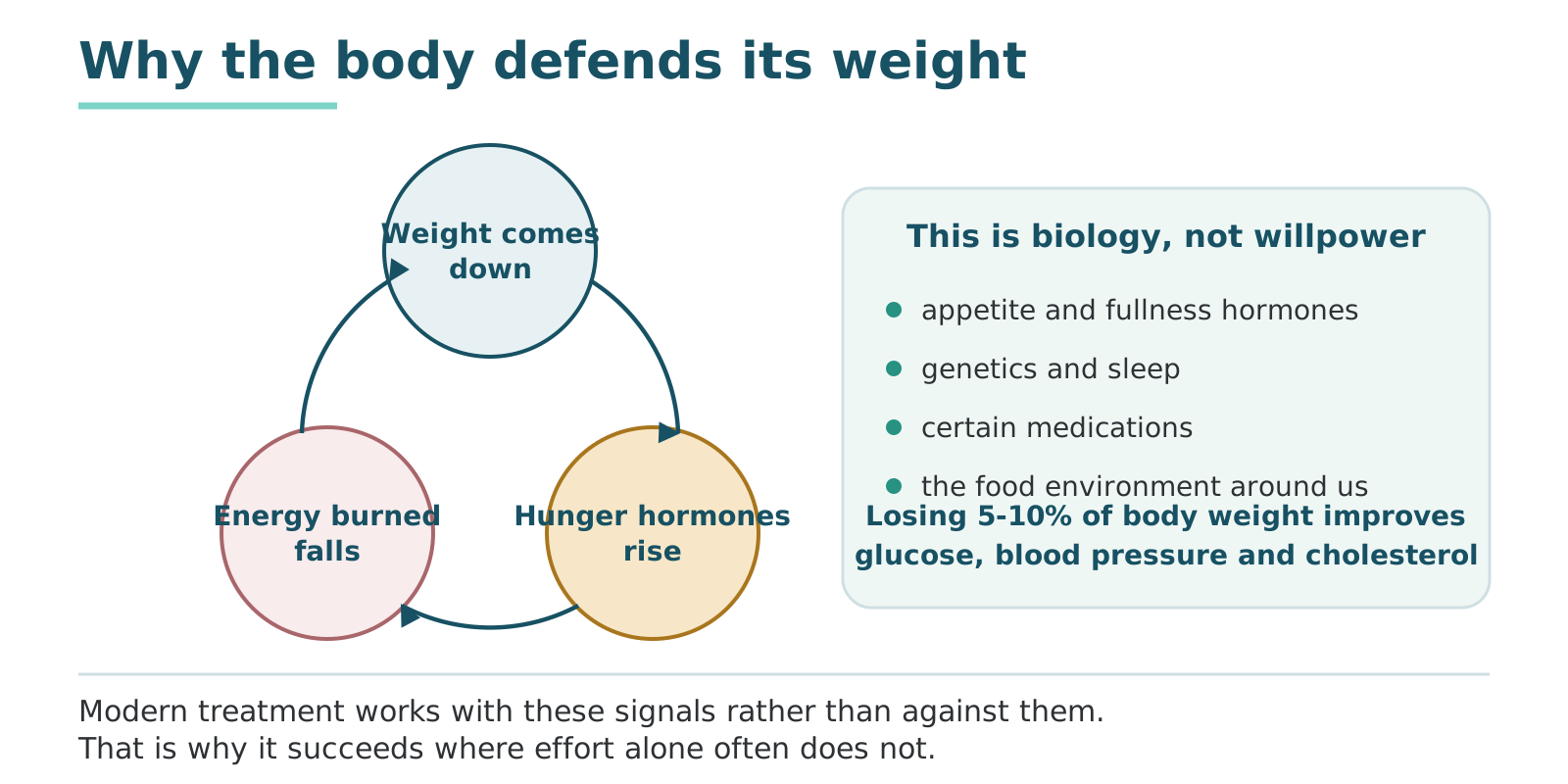
Obesity is a long-term medical condition, not a matter of willpower. Body weight is regulated by powerful biological systems: appetite and fullness hormones from the gut and from fat tissue, signals in the brain, genetics, sleep, stress, certain medications, and the food environment around us. When someone loses weight, the body actively defends the higher weight by increasing hunger and reducing the energy it burns — which is why regain is so common, and why it is so unfair to attribute it to a lack of discipline.
Carrying excess weight raises the risk of type 2 diabetes, high blood pressure, high cholesterol, fatty liver, sleep apnoea, joint problems and several cancers. Encouragingly, a modest and sustained reduction of around five to ten per cent meaningfully improves blood glucose, blood pressure and cholesterol — the health benefits arrive well before any change in clothing size.
How it is diagnosed
Assessment begins with a full history: your weight over time, what you have tried before and what happened, your eating patterns, sleep, mood, medications and family history. This conversation is conducted without judgement, and it shapes everything that follows.
BMI and waist circumference give a starting picture, though neither tells the whole story on its own. Blood tests screen for diabetes, cholesterol abnormalities, thyroid dysfunction, liver health and the hormonal causes of weight gain. We also look actively for sleep apnoea, fatty liver and joint problems, because treating these often produces the fastest improvement in how you feel.
How it is managed
The nutrition and activity plan is built with a dietitian and designed to be sustainable, rather than being a restrictive short-term diet that works briefly and then collapses. Addressing sleep, stress and eating patterns frequently unlocks progress where previous attempts have stalled.
Medication is now a genuinely effective option. Modern treatments, including the GLP-1 based therapies, produce clinically significant weight loss and are prescribed and monitored by our specialists. At the same time we review your existing medicines, as several commonly used drugs promote weight gain and can often be substituted for alternatives that do not.
Bariatric surgery is discussed and referred where appropriate, with our team providing the long-term hormonal and nutritional follow-up that surgery requires. Throughout, obesity is treated as a chronic condition deserving ongoing support rather than a problem to be fixed once and forgotten.
Further reading
The Obesity Action Coalition (obesityaction.org), the Endocrine Society patient hub (hormone.org) and The Obesity Society (obesity.org) all provide sound, non-judgemental information.
Speak with our team
Our specialist endocrinologists diagnose and manage this condition every day. Request a consultation with our team today.