Thyroid eye disease is most often linked to Graves’ disease, the autoimmune cause of an overactive thyroid. The same immune process that targets the thyroid can also target the tissues sitting behind the eye.
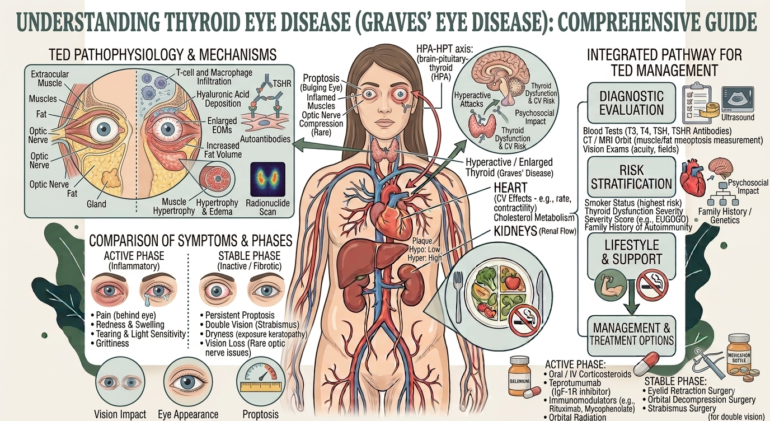
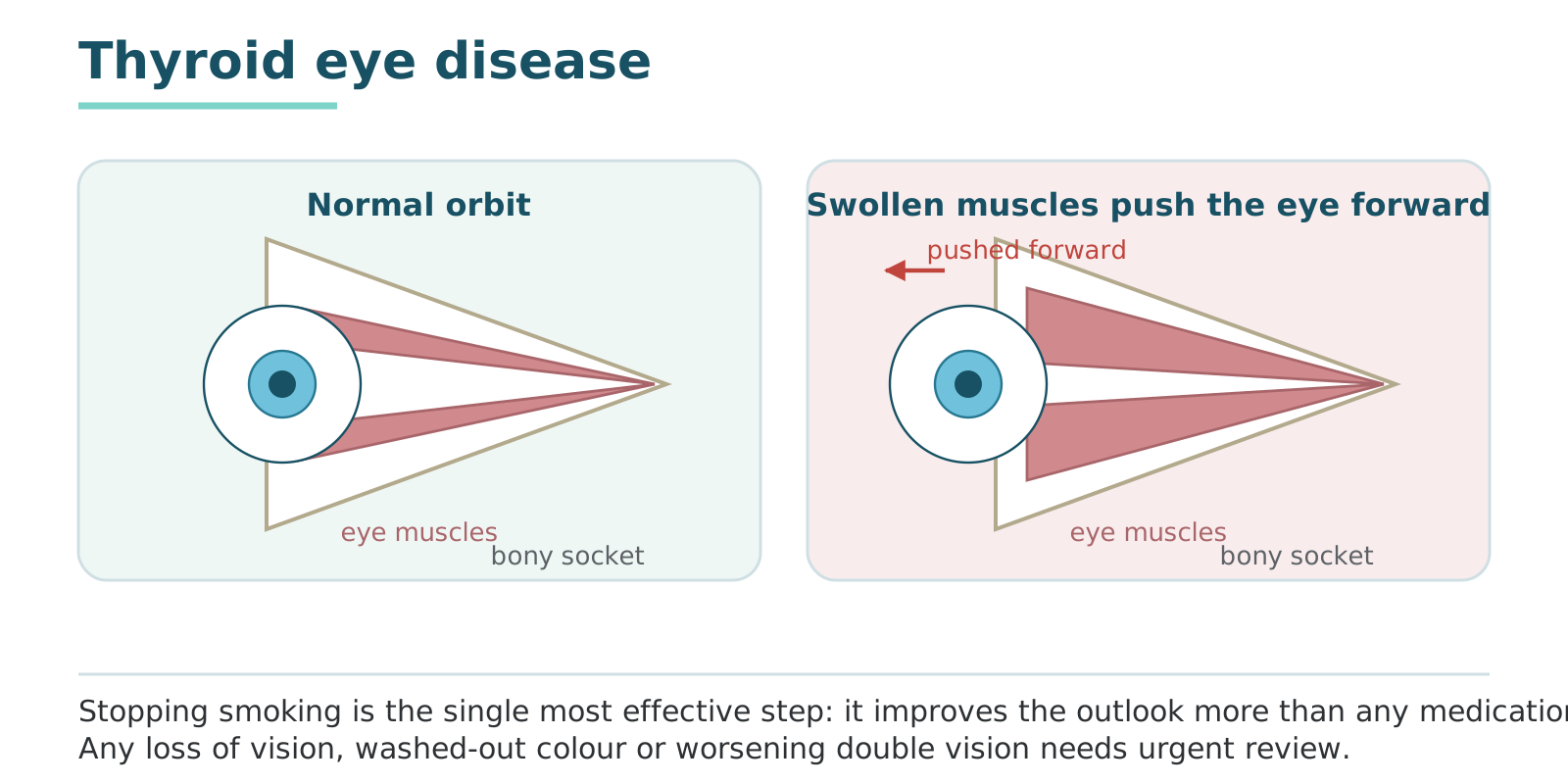
The muscles and fat within the eye socket become inflamed and swollen. Because the bony socket cannot expand, that swelling pushes the eyeball forward, producing a bulging or staring appearance, puffy lids, redness, grittiness, watering and sometimes double vision.
It can appear before, during or after the thyroid problem itself, so the timing is often confusing. Smoking makes it considerably worse.
How it is diagnosed
Assessment begins with a clinical examination in which we look at the position of the eyes, the degree of lid swelling, the range of eye movements and your vision. Thyroid blood tests, including the antibodies that support a diagnosis of Graves’ disease, are done alongside this.
Imaging with CT or MRI of the eye sockets shows the swollen muscles when the picture is unclear or when treatment decisions depend on it. We also work closely with ophthalmology, and involve them early if there is any effect on vision.
How it is managed
Stopping smoking is the single most important step you can take. Smoking substantially worsens the disease and reduces the response to every available treatment, and quitting improves the outlook more than any medication we can offer. Getting your thyroid hormone levels back to normal and keeping them there also helps the eyes settle.
For mild disease, comfort measures are often enough: lubricating eye drops, sunglasses for light sensitivity, and raising the head of the bed to reduce morning puffiness. Selenium may be of benefit in mild disease, and we will advise whether it is appropriate for you.
Moderate or severe disease requires active treatment. The options include steroids, targeted biologic medicines, radiotherapy, and surgery to the eye socket, lids or muscles once the inflammatory phase has settled. Sequencing matters here, and we coordinate this with your ophthalmologist.
When to seek care promptly
Loss of vision, colours appearing washed out, or worsening double vision needs urgent assessment, as does severe eye pain or an eye that will not close fully.
Further reading
The American Thyroid Association (thyroid.org) has dedicated material on Graves’ disease, and the Endocrine Society patient hub (hormone.org) covers the condition as well.
Speak with our team
Our specialist endocrinologists diagnose and manage this condition every day. Request a consultation with our team today.